
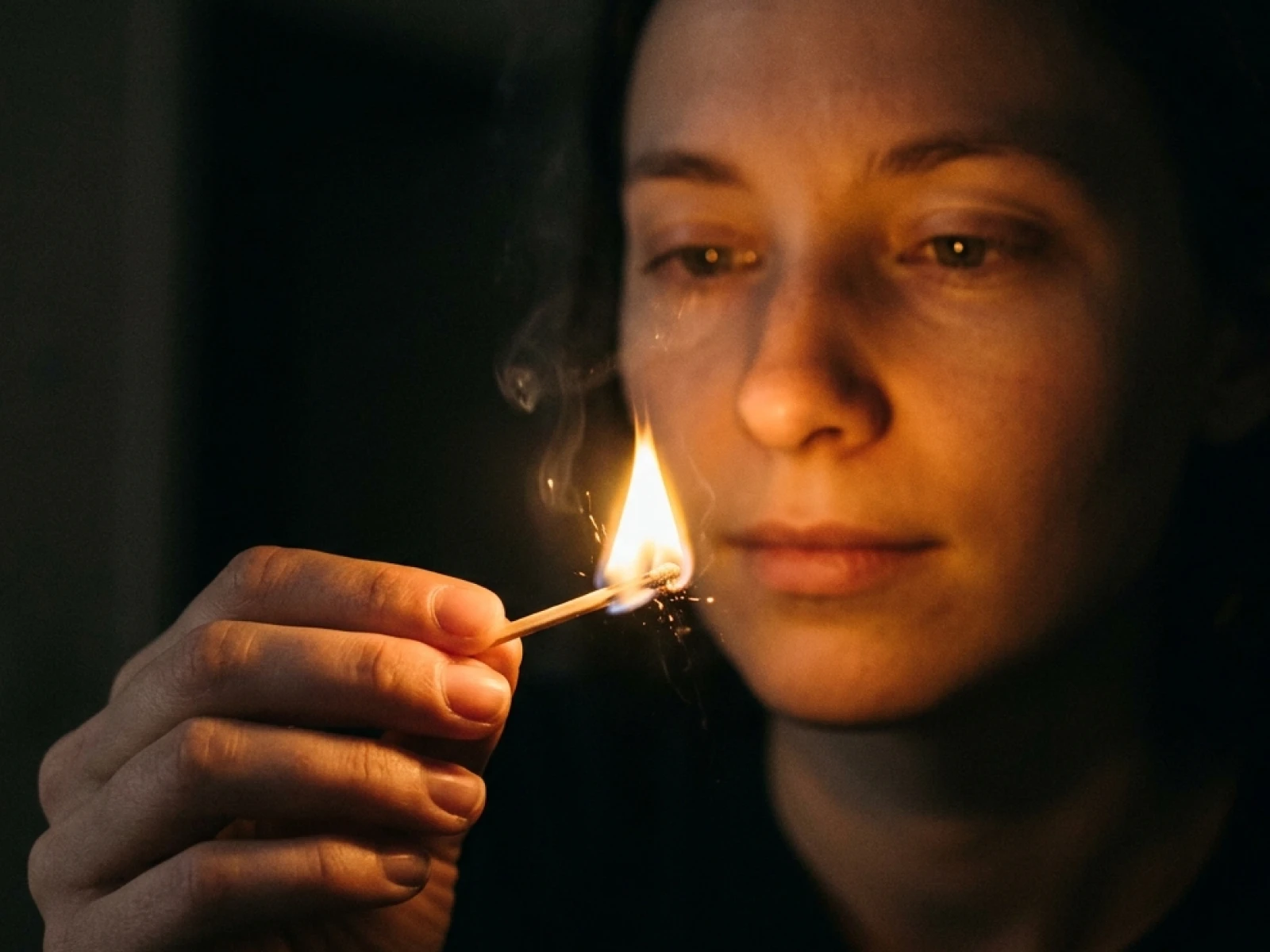
Archbishop Desmond Tutu once said:
“Hope is being able to see that there is light despite all of the darkness.”
It is a beautiful thought.
It can also feel slightly irritating when life has turned all the lights off, hidden the fuse box and left us stumbling around in the dark looking for our reading glasses.
When life is going well, hope comes easily. We make plans, imagine possibilities and talk confidently about the future. We can see where we are going and believe we have some influence over how we might get there.
But hope is not really tested when the path is clear.
It is tested when the job disappears, the relationship ends, our health changes, the business struggles or the future we had carefully imagined begins quietly packing its bags.
In those moments, being told to “stay positive” can feel less like encouragement and more like someone handing you a motivational fridge magnet while the kitchen is on fire.
Genuine hope is not about pretending the darkness does not exist.
It is about refusing to believe the darkness is the whole story.
Hope is not the same as optimism
We often use hope and optimism as if they are interchangeable, but there is an important difference.
Optimism is the general belief that things will probably turn out well. Hope is more active. It involves believing that something better may be possible and that there might be something we can do to move towards it.
The psychologist Charles Snyder developed one of the most influential theories of hope. He described hope as having two essential components: agency and pathways.
Agency is the belief that we can take action.
Pathways are the possible routes we can take to reach a desired outcome.
In simpler terms, hope needs both the will and the way.
It is not simply, “I hope things improve.”
It is, “I want things to improve, I believe I can play some part in that, and if one route is blocked, I may be able to find another.”
Snyder’s research connected higher hope with better outcomes across areas including achievement, psychological adjustment, physical health and the ability to cope with obstacles. Crucially, hopeful people were not necessarily those whose lives contained fewer problems. They were often better able to generate alternative routes when the original plan stopped working. Snyder’s Hope Theory
That matters because life is rather fond of ignoring the plan.
We may have intended to travel directly from A to B, only to discover that B has been cancelled, the road is closed and someone has placed temporary traffic lights at every emotional junction.
Hope does not insist that the original route must remain open.
Hope asks, “What other way might there be?”
Why darkness can feel permanent
When we are struggling, the present moment can begin to feel like evidence of the entire future.
Because we cannot currently see a way forward, we assume there is no way forward.
Because we feel overwhelmed today, we imagine we will always feel overwhelmed.
Because one opportunity has disappeared, we conclude that all opportunity has gone with it.
This is not weakness or a failure of character. It is partly what the mind does under sustained stress.
When we perceive threat, our attention narrows. We become more focused on the immediate problem and less able to see wider possibilities. This can be useful when we need to respond to genuine danger. It is less useful at three in the morning when the danger is an unanswered email and our brain has promoted it to an international incident.
Psychologist Barbara Fredrickson’s broaden-and-build theory suggests that positive emotions can widen our range of attention, thoughts and possible actions. They can help us become more curious, flexible and creative, gradually building psychological and social resources. This does not mean that we must force ourselves to be cheerful. It means that even small experiences of interest, connection, relief or hope can help loosen the mental tunnel vision created by difficulty. The broaden-and-build theory of positive emotions
Darkness narrows the view.
Hope helps us look sideways.
When powerlessness becomes learned
There is another reason hope can disappear.
If we experience repeated situations in which our actions seem to make no difference, we may begin to stop trying. Psychologists call this learned helplessness.
Early explanations focused on what happens when people or animals learn that outcomes appear unrelated to their actions. More recent neuroscience has placed particular emphasis on the importance of perceived control. Experiences of control can protect against some of the passivity and fear associated with uncontrollable stress. Learned Helplessness at Fifty
This helps explain why someone may remain stuck even when others can see several possible options.
From the outside, we might ask, “Why don’t they do something?”
From the inside, the person may be asking, “What is the point? Nothing I do makes any difference.”
That is why telling someone to “try harder” is rarely helpful. Effort is difficult to summon when we have stopped believing effort matters.
The first task is not always to solve the entire problem. It may be to rediscover one small area of influence.
One conversation we can initiate.
One boundary we can set.
One question we can ask.
One decision we can make.
One small promise to ourselves that we can actually keep.
Hope often returns through evidence. We take a modest action and discover that something shifts. Perhaps the external situation changes. Perhaps it does not, but we experience ourselves differently within it.
We are no longer simply waiting for life to happen to us.
Honest hope leaves room for difficulty
There is a version of positivity that asks people to look on the bright side before anyone has properly acknowledged the dark one.
Someone loses a job and is immediately told it may be “the best thing that ever happened.”
Someone is struggling with illness and hears that “everything happens for a reason.”
Someone is grieving and is reminded to be grateful for the time they had.
These responses are usually well intended. They may also cause the person to feel that their actual experience is too uncomfortable for others to sit with.
Hope should never require us to edit out pain.
We can be grateful and grieving.
Strong and frightened.
Confident and uncertain.
Hopeful and thoroughly fed up.
Human beings are inconveniently capable of feeling several things at once. It would be much tidier if our emotions formed an orderly queue, but they tend to arrive together, talk over one another and complain about the seating.
Honest hope says, “This is hard, and something different may still be possible.”
The word and matters.
“This is hard, but everything will be fine” can dismiss what we are experiencing.
“This is hard, and I do not yet know how it will end” allows truth and possibility to share the same room.
Hope is something we can strengthen
We sometimes speak about hope as if it were something people either possess or lack. Some people seem naturally hopeful, while others are more likely to look for the cloud surrounding every silver lining.
Yet research suggests hope is not simply a fixed personality trait. It can be developed.
A meta-analysis of hope-enhancement strategies found that structured interventions produced modest improvements in hope, life satisfaction and psychological distress. The effects were not miraculous, and the researchers highlighted limitations in the evidence. Hope is not a magic wand, particularly because magic wands remain disappointingly difficult to source. But the findings support the idea that the way we think about goals, routes and personal agency can be influenced. Meta-analysis of hope enhancement strategies
A more recent meta-analysis also found that the two elements of Snyder’s theory, agency and pathways, were both associated with lower levels of depression and anxiety. Agency, the feeling that we can initiate and sustain movement, showed a particularly strong relationship with depression. The authors were careful not to claim simple cause and effect, but the pattern reinforces the importance of feeling that some action remains possible. Hope, depression and anxiety meta-analysis
The practical implication is important.
When hope is low, asking someone to imagine a wonderful future may be too great a leap.
A more useful question might be:
“What would make tomorrow two per cent better?”
Not perfect.
Not transformed.
Just slightly more manageable, meaningful or connected.
Finding the smallest light
When people hear the phrase “light in the darkness,” they may imagine a dramatic breakthrough. The phone rings with good news. The medical result is clear. The ideal opportunity suddenly appears carrying a clipboard and asking when we can start.
Occasionally, life does provide these moments.
More often, the light is much smaller.
It is sending the message we have been avoiding.
Admitting to someone that we are struggling.
Going for a walk when our thoughts have become stuck in a loop.
Updating the CV.
Making the appointment.
Saying no to something that is draining us.
Saying yes to something that frightens us in a good way.
Allowing ourselves to rest without first earning it through complete exhaustion.
The action itself may appear insignificant. What matters is the message beneath it:
“I am not completely powerless here.”
That belief can create movement, and movement can reveal possibilities that were invisible while we were standing still.
We do not always think our way into hope.
Sometimes we act our way towards it.
Hope at work is not corporate cheerfulness
Hope matters in organisations too.
A leader does not create hope by announcing that everything is “exciting” while the team are clearly exhausted, understaffed and wondering whether excitement now means another spreadsheet.
Nor does a leader create hope by pretending to have answers they do not possess.
Credible hope begins with truth.
“This is where we are.”
“This is what we know.”
“This is what we do not yet know.”
“This is what we can influence.”
“This is what we will do next.”
Research into hope in workplace settings has found positive associations with performance, job satisfaction, commitment, health and wellbeing, alongside negative relationships with stress and burnout. As with much workplace research, association does not prove that hope alone caused these outcomes. Nevertheless, the findings suggest that employees are more likely to function well when they can see meaningful goals, workable routes and a genuine role for themselves. Review and meta-analysis of hope at work
Leaders cannot promise that every difficulty will disappear.
They can help people distinguish between what is fixed, what is uncertain and what remains open to influence.
That is not false reassurance.
It is leadership.
What if you cannot see the light yet?
Sometimes people cannot see any light at all.
In those moments, demanding that they find hope may create another burden. Now, alongside everything else, they may feel they are failing at positivity.
We do not always need to manufacture hope by ourselves.
Sometimes we borrow it.
We borrow it from someone who can see possibilities we cannot yet see.
From a friend who reminds us of what we have already survived.
From a colleague who offers a different perspective.
From a coach who helps us separate what is happening from the story we have begun telling ourselves about what it means.
From a conversation in which we do not receive instructions, clichés or a ten-point life plan, but are given enough space to hear our own thinking again.
Hope can begin with being understood.
Not fixed. Not rescued. Understood.
Darkness is not the whole story
Archbishop Tutu’s words do not ask us to deny darkness. His own life and work gave him no reason to be naive about suffering, injustice or the capacity human beings have for making a dreadful mess of things.
The power of the quotation lies in the word despite.
Hope exists not because darkness is absent, but because darkness does not have the final claim on what is possible.
Perhaps you are in a season of uncertainty now.
You may be facing a transition you chose, or one that arrived without an invitation.
You may know something needs to change but have no idea what that change should be.
You may feel stuck between an old version of life that no longer fits and a new one that has not yet taken shape.
You do not need to see the whole path.
You do not need complete confidence.
You do not need to produce a five-year plan before breakfast.
You may only need to leave room for the possibility that what you can see today is not everything there is to see.
So, perhaps the question is not:
“How do I fix my whole life?”
Perhaps it is:
“Where is the smallest glimmer of light?”
“What remains within my influence?”
“What is one step I could take towards it?”
Hope does not always arrive as a dazzling sunrise.
Sometimes it is a tiny lamp being switched on in one corner of a very messy room.
But once there is light, however small, the darkness is no longer the only thing we can see.
If you need a little space to look for that light, Myles is here. Not to tell you what to do, but to help you think, reflect and find your own next step.