
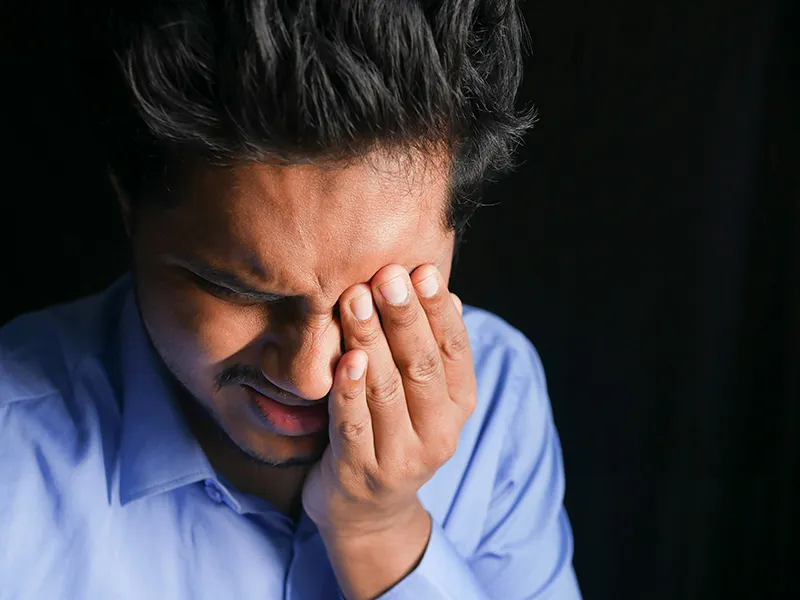
“Big boys don’t cry.”
It is one of those phrases that many men will recognise, even if nobody ever said it to them exactly like that. Sometimes it arrived directly. Sometimes it was a raised eyebrow, a quick “You’re alright,” before anyone had checked whether they were, or the sense that tears were something to get over quickly and preferably out of sight.
It often became part of the emotional background noise of growing up.
Boys can be encouraged to be brave, strong, self reliant and able to take a knock. None of those qualities is a problem in itself. Courage, resilience and responsibility are valuable. The difficulty comes when strength is taught as the absence of vulnerability, or when sadness is treated as something embarrassing that must be hidden before it makes anyone uncomfortable.
Then boys can start learning an unspoken rule. Anger may be acceptable. Frustration may be understandable. Shouting at the television, swearing at a flat tyre or becoming mysteriously furious with a lawnmower can all pass as normal expressions of feeling. But sadness, loneliness, fear, grief or overwhelm can feel much harder to name.
Why So Many Men Say They’re “Fine”
By adulthood, many men have become extremely skilled at functioning while carrying a lot.
They work. They provide. They get on with things. They solve practical problems. They may be the person everyone else turns to in a crisis. Yet when somebody asks, “How are you really?” the answer can arrive almost automatically.
“Fine.”
“Busy.”
“Bit tired.”
“Nothing really.”
Sometimes that answer is accurate. Sometimes it is the emotional equivalent of putting a dust sheet over a room full of furniture and hoping nobody notices there is still a house underneath.
This is not about criticising men, or suggesting that every man needs to cry more often in order to be healthy. People express emotion differently. Some cry easily. Some rarely do. Some process feelings by talking, moving, making things, spending time with people they trust, writing, praying, laughing, being quiet or doing something practical with their hands.
The aim is not to make tears the measure of emotional health.
The aim is to question the idea that emotional restriction is the same thing as strength.
Is Crying Really a Sign of Weakness?
Crying is not a malfunction. It is a normal human response to emotion. Adults cry at loss, conflict, frustration, relief, pride, joy, music, films, weddings, the birth of a child and, occasionally, when a kitchen drawer refuses to close for the fourth time. Emotional tears are part of the way human beings communicate that something significant is happening inside.
That does not mean every tear is a release, a breakthrough or a form of therapy. The evidence is more nuanced than that. Crying does not automatically make people feel better, and whether it helps can depend greatly on context, how safe someone feels and how others respond. A person who cries and is met with kindness, comfort or understanding may feel differently afterwards than someone who cries and feels ashamed, judged or alone.
What matters is that crying can be one form of emotional expression, not evidence of weakness.
Research also suggests that tears can affect how other people respond. Seeing somebody cry can signal vulnerability and may increase the likelihood that others offer support. That is not manipulation. It is part of being social creatures. We are wired, at least in part, to notice when somebody is struggling.
The Hidden Cost of Restrictive Masculinity
Yet many men have learned to keep that signal switched off.
Traditional masculine expectations often place a high value on toughness, emotional control, self reliance and the ability to cope without help. Again, none of those qualities is inherently harmful. The issue is rigidity. When a man feels he must always appear strong, always manage alone and never reveal distress, he may become less likely to ask for support when he genuinely needs it.
Large studies and reviews have found that stronger conformity to restrictive masculine norms is associated with poorer mental health outcomes and less willingness to seek psychological help. That does not mean masculinity is the problem. It means that one narrow version of masculinity can become costly when it leaves no room for fear, sadness, uncertainty or asking for support.
What Emotional Suppression Really Looks Like
The cost is not always obvious.
It may show up as overwork. Irritability. Drinking too much. Withdrawal. Constant busyness. Becoming overly focused on practical tasks because practical tasks feel safer than emotional conversations. It may show up as snapping at people you love because anger feels more available than hurt. It may show up as the sentence, “I’m just tired,” when the reality is that life feels heavier than you know how to explain.
Sometimes, emotional suppression is not even a conscious decision. It is simply what a person has always done.
If you were taught early that tears made other people uncomfortable, you may have learned to hold them back before you even understand what you are feeling. If you grew up seeing the men around you stay quiet, carry on and never talk about pain, you may assume that is simply how adulthood works.
Composure Is Not the Same as Suppression
But being emotionally contained and being emotionally disconnected are not the same thing.
Real strength is not the ability to feel nothing. It is the ability to stay in contact with what you feel without being ruled by it. It is being able to say, “This has got to me,” without believing that you have somehow failed. It is being able to ask for help before things reach breaking point. It is being able to have a hard conversation without turning it into a fight, a joke or a sudden interest in reorganising the garage.
There is a difference between composure and suppression.
Composure means you can feel something strongly and still choose how to respond.
Suppression means you are trying to make the feeling disappear because you do not believe it is acceptable for anyone else to see.
One can be useful. The other can become exhausting.
When emotion is repeatedly pushed down, it does not always disappear. It can come out sideways. It may emerge as stress, tension, anger, numbness, sleep problems, distance in relationships or a growing sense that nobody really knows what is going on inside you. Research on emotional suppression has linked it with lower social wellbeing, less closeness and reduced perceived support. That makes sense. If we hide too much of ourselves, other people may care deeply about us but still have very little chance to reach us.
Emotional Strength Means Having More Options
This is not an argument for turning every dinner table into a group therapy session.
Nobody needs to announce their inner world in full detail every time they are asked how they are. Emotional intelligence is not about saying everything that crosses your mind, and it is not about crying on command to prove you are in touch with your feelings.
It is about having options.
It is being able to notice when something is affecting you. It is having words beyond “fine”, “stressed” and “annoyed.” It is knowing who you can speak to. It is allowing yourself to be supported without feeling that you have lost your status as the competent one.
Sometimes that starts with a very small sentence.
“I’ve had a difficult day.”
“I’m more bothered by this than I expected.”
“I don’t need you to fix it. I just need to say it out loud.”
“I’m struggling a bit.”
“I don’t know what I feel yet, but I know I’m not quite myself.”
Those sentences do not make anybody less of a man. In many ways, they require more courage than pretending nothing is wrong.
They also make relationships more real.
What Opening Up Actually Looks Like
People often say they want the men in their lives to open up, but that can sound vague and intimidating. What does “open up” actually mean? It does not necessarily mean sharing every thought, every memory or every fear. It can mean allowing somebody to see a little more of the truth. It can mean telling your partner you are worried rather than becoming distant. It can mean telling a friend you have had a rough week rather than cancelling plans with no explanation. It can mean speaking to a GP, therapist or support service when low mood, anxiety, anger or sleep problems are affecting your life.
It can mean crying.
Or it can mean sitting quietly with somebody after you have finally admitted that you are finding things hard.
The most important thing is not whether tears arrive. The most important thing is whether you still have permission to be human when they do.
There is a particular pressure on men who have spent years being the dependable one. The father who holds everything together. The partner who is expected to be steady. The manager who has to have the answers. The friend who is good at making everyone laugh. The bloke who can always be relied upon to “sort it.”
Those roles can be meaningful and valuable. But they can also become a hiding place.
When other people depend on you, it may feel risky to admit that you are struggling. You may worry that you will burden them, disappoint them or make them feel less safe. But people do not usually need perfection from those they love. They need honesty, reliability and connection. Being able to say, “I’m having a difficult time, but I’m dealing with it,” can often create more trust, not less.
Redefining Strength for the Next Generation
There is also something important about modelling this for younger boys.
When boys see men show emotion without shame, apologise without collapsing, talk about stress without making it a joke and ask for help without acting as though they have failed, they learn a broader version of what strength can look like. They learn that courage is not the absence of feeling. It is the willingness to stay present with feeling and still act with integrity.
That may be one of the most useful things any man can pass on.
A Different Definition of Strength
So perhaps this weekend, there is no need to force a grand emotional breakthrough. No need to sit in a darkened room watching Marley & Me until something happens. No need to prove anything to anybody.
Just notice.
When something gets to you, what do you usually do with it?
Do you turn it into anger?
Do you make a joke?
Do you get busy?
Do you go quiet?
Do you tell yourself it does not matter?
And perhaps ask one more question.
What might change if I allowed myself to be a little more honest about what is going on?
The answer may not be tears.
It may be a conversation.
It may be a walk with someone you trust.
It may be a message you have been meaning to send.
It may be admitting that you are tired of carrying everything alone.
Big boys can cry.
But more importantly, big boys can feel.
And when they do, the world does not end.
It just gets a little more human.
One step at a time.